You’re too far back. Why can’t I just hang the P.A., for goodness sake? Does the vocalist really need to cup the mic? I just want to mix—why are they making me pack the truck, too!? Hey, front-of-house engineers: What’s the worst situation you’ve been in while on tour and how did you overcome it? Let us know by e-mailing [email protected].
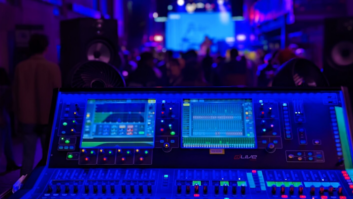
Several years ago, my brother invited me to hear Gregg Allman play at one of the few concerts we have in our little county each year. At the southernmost tip of the county on Solomon’s Island there is a plywood-covered band shell that backs up to the Chesapeake Bay, and for the audience they put out folding metal chairs on the parking lot in front. As the concert began, dark storm clouds started brewing over the bay, and before long there was lightning and thunder. The sky then opened up and dumped on us a torrential rain; the stagehands rushed to cover the equipment and especially wrap the front-of-house console as the rain started pummeling the crowd, but the band played on.
Before long, leaks started coming through the band shell, and in a short while the P.A. gave out. But the band rocked on, and I was in heaven. I was in the second row, maybe 15 feet from the band, and with no P.A. you could hear Gregg Allman’s organ, the drums, the horns and Derek Trucks’ guitar with better than studio clarity and separation. (Their stage amps still worked.) They kept on rocking, even after Gregg lost power to his keyboards, until none of them had power anymore. It was the best concert I had ever attended, and that was the day I became a hardcore fan of Derek’s guitar playing.
Peter Wharton
Stags Cliff Studios
Chesapeake Beach, Md.
I built a remote recording/live broadcast studio in a high school
fieldhouse. I’m an audio engineer for the Band of the Air Force Reserve at
Robins AFB, GA. We were doing our annual Independence Day concert, which
featured our Air Force band and country artist John Berry at one of the
local high school football stadiums. The only place near the stage, which
sat in the end zone, where I could isolate myself was the fieldhouse’s
shower room, which was 30×50 feet of tile and concrete. I set up more than a dozen
baffles to cut down on the reflections so I could do a live broadcast mix of
the show to the local TV station’s remote truck. It was 70-plus input show so I
ended up sub-mixing parts of the band from two analog consoles into a Yamaha
DM1000 for my final 2-track. I also sub-mixed those 70-plus inputs into
a 32-channel recording rack, full of MOTU 896s. I had the entire rig in and
out of the fieldhouse within 32 hours.
—A1C Paul McWhirter, Band of the Air Force Reserve, Robins AFB, GA
I had a pretty significant show to do in Miami and didn’t think my Yamaha MC2404 board was going to be sufficient for the job and so I rented a 40-channel Allen & Heath board (with a Whirlwind snake). I also brought my Yamaha and a nice old Peavey 16-channel mixer with me, just in case.
The venue was an old church that had been converted into a community center. I got as far from the stage as I could without running cables all over the place. I rigged a good spot for my outboard rack and had an old drafting table for the desk, so I thought I was comfortably away from the “public.”
I was seriously wrong. An intoxicated gentleman had just purchased a 32-ounce beer in the lobby and decided to get close to my station. The dude tripped and poured the entire beer directly into the console. It shorted the board to the point that it just shut itself down. Thankfully, I had the two backup desks with me. After about a 20-minute delay in swapping equipment, I had the audio back online and erected a huge barricade around me.
—Bruce W. Hansen